Categories
Apple Gadget Gadgets News Top News

Apple Watch 11 Glucose Sensor Details REVEALED

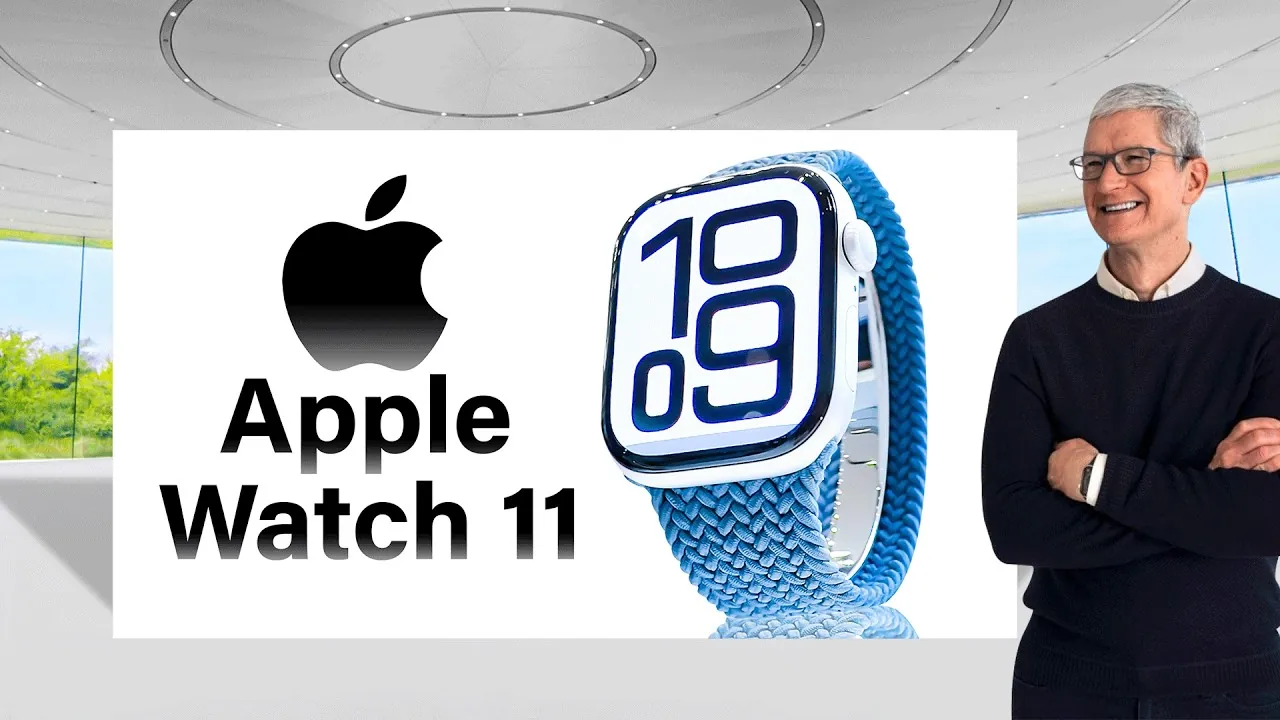
Apple Watch 11

The Apple Watch Series 11, anticipated for release in September 2025, is shaping up to be a continuation of Apple’s strategy of steady refinement rather than a dramatic overhaul. While speculation about a non-invasive glucose sensor has persisted for years, this highly awaited feature is unlikely to debut with this model. Instead, Apple appears to be concentrating on enhancing existing features and maintaining the design language introduced with the Series 10.

If you’re evaluating whether to upgrade, here’s a detailed look at what the Series 11 is expected to offer in a new video from Matt Talks Tech.

Design and Features: Subtle Refinements, Consistent Aesthetic

The Series 11 is expected to retain the slim profile and larger display that debuted with the Series 10, continuing Apple’s commitment to a sleek and modern aesthetic. This design has been well-received by users, and Apple seems intent on refining rather than reinventing it. While the overall appearance will remain familiar, minor adjustments may enhance durability and usability, making sure the watch remains practical for everyday wear.

One notable advantage for long-time users is the expected backward compatibility with existing Apple Watch bands. This ensures that accessories purchased for earlier models will remain usable, reinforcing Apple’s reputation for maintaining a cohesive ecosystem. These subtle refinements aim to enhance the user experience without requiring a complete overhaul of accessories or habits.

Glucose Sensor: Progress Continues, But Not Yet Ready

The development of a non-invasive glucose sensor has been one of Apple’s most ambitious goals in wearable technology. Reports suggest that by 2023, Apple had achieved a proof-of-concept for this feature, marking significant progress. However, the challenges of making sure accuracy and reliability in a consumer device mean that this technology is unlikely to be included in the Series 11.

For users managing glucose levels, this means waiting for future iterations. Apple’s cautious approach reflects the complexity of integrating medical-grade technology into a wearable device. While the glucose sensor remains a long-term objective, its absence in the Series 11 highlights Apple’s focus on delivering features that meet its high standards for reliability and usability.

Health Monitoring: Heart Rate Sensor Updates

Health tracking remains a cornerstone of the Apple Watch, and the Series 11 may bring enhancements to its heart rate sensor. Apple has consistently refined its health features, and this year could see improvements to the heart rate monitoring capabilities that were initially rumored for the Series 10 but not fully realized.

Additionally, there is speculation that Apple might reintroduce features previously disabled in certain regions. For example, some heart rate sensor functionalities were removed for U.S. users in the Series 9. If these features are reinstated, it would enhance the watch’s appeal to fitness enthusiasts and health-conscious users, even if such updates don’t generate as much excitement as a new glucose sensor.

Release Date and Pricing: Predictable Patterns

The Apple Watch Series 11 is expected to launch alongside the latest iPhones in late September 2025, following Apple’s established release schedule. Pricing is likely to start at $399, consistent with the Series 10. However, external factors such as tariffs or supply chain disruptions could influence the final price.

This predictable pricing and release pattern reflect Apple’s methodical approach to product updates. While the Series 11 may not introduce new features, it aims to deliver a polished and reliable user experience that aligns with customer expectations.

Incremental Refinements Over Major Innovations

The Apple Watch Series 11 exemplifies Apple’s strategy of incremental improvement. Rather than introducing radical changes, the company appears focused on refining existing technologies to enhance reliability, usability, and overall performance. While this approach may not satisfy those hoping for fantastic updates, it ensures that the Apple Watch remains a dependable and versatile wearable.

For users seeking a reliable device with a refined experience, the Series 11 offers a compelling option. It builds on the strengths of its predecessor while maintaining the consistency and usability that Apple Watch users have come to expect.

Key Takeaways

  • The Series 11 is expected to retain the slim design and larger screen of the Series 10, with minor refinements to improve durability and usability.
  • A non-invasive glucose sensor, while under development, is unlikely to debut in this iteration due to technical challenges.
  • Health features like the heart rate sensor may see updates, potentially reintroducing functionality previously removed in certain regions.
  • Pricing is expected to start at $399, consistent with previous models, barring external disruptions.
  • The Series 11 focuses on incremental improvements, offering a polished and reliable experience rather than new innovations.

Below are more guides on Apple Watch Series 11 from our extensive range of articles.

Source & Image Credit: Matt Talks Tech

Filed Under: Apple, Gadgets News, Top News

Latest Geeky Gadgets Deals

Disclosure: Some of our articles include affiliate links. If you buy something through one of these links, Geeky Gadgets may earn an affiliate commission. Learn about our Disclosure Policy.

Categories
Crypto News

Circle Mints $250M USDC on Solana, Boosting Supply to $1B

Circle has expanded its USDC issuance on Solana by minting an additional $250 million.

This latest minting raises the company’s total issuance on the blockchain to $1 billion in the past week.

The surge reflects increasing demand for USDC among traders and DeFi protocols within the Solana ecosystem.

Circle Expands USDC Supply on Solana

The latest minting brings Solana’s total stablecoin supply to $11.579 billion. USDC now dominates the blockchain, holding 78% of the stablecoin market. The supply increase aligns with Circle’s strategy to support growing DeFi activities on Solana.

Since January, Circle has minted $8 billion in USDC on Solana. The company expensed $6 billion to the market in January and repeated this action by distributing an extra $2 billion in February. The steady growth suggests rising institutional and retail interest in USDC within the ecosystem.

According to DeFiLlama, USDC’s market cap on Solana has reached $9.093 billion. The stablecoin presently retains the top position among competing stablecoins USDT and PYUSD. The growing adoption indicates confidence in USDC as a preferred digital dollar on Solana.

Tether Remains Key Player on Solana

Despite USDC’s dominance, USDT remains the second-largest stablecoin on Solana. Tether currently has a market cap of $1.968 billion on the blockchain.

This positions USDT as the only major competitor to USDC within Solana’s growing ecosystem.

Tether’s presence on Solana highlights its continued relevance in crypto trading.

USDC continues to be extensively employed for financial transactions and serves as base liquidity and decentralized application foundation.

Its market cap suggests sustained demand, even with Circle’s aggressive USDC expansion.

While USDT lags behind USDC on Solana, it still leads the global stablecoin market.

Tether remains the largest stablecoin in circulation across multiple blockchains, and its overall market presence ensures competition among stablecoin issuers.

Political Figures Fuel Volatility in Memecoins

Solana’s stablecoin market has grown significantly, surpassing $10 billion in January.

The stablecoin market has demonstrated a 110% growth pattern since its previous value of $5.1 billion zoomed up to $10.7 billion during January.

Memecoins have become increasingly popular blockchain members while their market underwent rapid growth.

Memecoins emerged due to the platforms created by Pump.Fun.

The platforms make building and launching memecoins straightforward, thus drawing in new network participants.

The increased activity has boosted the demand for stablecoins like USDC and USDT. U.S. President Donald Trump began the memecoin TRUMP in January of this year.

When first introduced, the token reached $15 billion in market capitalization before its value decreased to $3 billion.

The memecoin market activity of this figure triggered other prominent personalities to investigate their memecoin projects.

Following Trump’s entry into the space, Melania Trump launched her memecoin. Her move made her the first First Lady to introduce a cryptocurrency token.

The trend of political figures launching memecoins has added volatility to the market.

Argentina’s President Javier Milei also became linked to a memecoin project. The token, named $LIBRA, later turned out to be a scam.

Milei now faces legal issues related to the failed project. Political figures participating in memecoins have reacted to market speculations and significant group disputes.

Russia declared its intention to issue a new cryptocurrency back in January.

This decision has resulted in price volatility of these tokens, bringing about both investor interest and regulatory scrutiny.

Research indicates these patterns will have definite and complex effects on the stablecoin market.

Categories
Gadget Gadgets News Top News

Pomera DM250US : Distraction-Free, Focus Tool for Writers $399

Pomera DM250US digital typewriter designed for focused writing

Have you ever sat down to write, only to find yourself derailed by a barrage of notifications, endless tabs, or the temptation to check just one more app? It’s a struggle many of us face in today’s hyper-connected world, where our devices seem designed to pull us in every direction except the one we want to go. Writing, an act that thrives on focus and flow, often feels like an uphill battle against digital distractions. But what if there were a way to reclaim that clarity—a tool that strips away the noise and lets you immerse yourself fully in your thoughts?

Enter the Pomera DM250US, a digital typewriter built with one purpose: to help you write without interruptions. It’s not a laptop, tablet, or smartphone—it’s a minimalist, portable writing companion that prioritizes your words over everything else. Whether you’re a novelist chasing a deadline, a student drafting an essay, or someone who simply wants to journal without distraction, this device offers a refreshingly simple solution. In the paragraphs ahead, we’ll explore how the Pomera DM250US creates a space where creativity can thrive, free from the chaos of modern tech.

Pomera DM250US

Early bird pledges are now available for the fresh project from roughly $399 or £332 (depending on current exchange rates), offering a considerable discount of approximately 20% off the typical retail price, while the Indiegogo crowd funding is under way.

Key Specifications :

  • Lightweight and portable design at only 1.37 pounds, with instant start-up for on-the-go writing.
  • Up to 20 hours of battery life for extended writing sessions without frequent recharging.
  • Ergonomic US-layout keyboard with silent, well-spaced keys for comfortable and efficient typing.
  • High-contrast LCD screen with adjustable backlight for readability in various lighting conditions.
  • Flexible file transfer options via USB-C, microSD, QR codes, and a dedicated app for cross-device compatibility.

The Pomera DM250US is a digital typewriter designed to foster focus and productivity by eliminating the distractions commonly associated with modern devices. Unlike laptops or tablets, it avoids notifications, pop-ups, and extraneous applications, offering a minimalist environment tailored for uninterrupted writing. This device appeals to writers who value simplicity and functionality, providing a streamlined experience that prioritizes the essentials of the writing process.

Distraction-free writing tool with minimalist design

Digital Typewriter for Focused Writing

If and when the Pomera DM250US campaign successfully raises its required pledge goal and the project progresses smoothly, worldwide shipping is expected to take place sometime around March 2025. To learn more about the Pomera DM250US typewriter for focused writing project examine the promotional video below.

Weighing just 1.37 pounds, the Pomera DM250US is exceptionally portable. Its lightweight and compact design make it easy to carry, whether you’re heading to a café, a park, or simply moving between rooms. The device is ready to use instantly upon opening, with no boot time required. This immediate start-up ensures you can capture your thoughts as soon as inspiration strikes, without delays or technical interruptions.

Lightweight and portable Pomera DM250US for writers on the goLightweight and portable Pomera DM250US for writers on the go

Key Features for Productivity

One of the most notable aspects of the Pomera DM250US is its impressive battery life. It offers up to 20 hours of continuous use on a single charge, making it well-suited for extended writing sessions. Whether you’re traveling or working in locations without convenient access to power outlets, the device is designed to keep pace with your creative flow, allowing you to focus on your work without frequent recharging.

The keyboard is another standout feature, designed for comfort and efficiency. Key highlights include:

  • A US layout with well-spaced, silent keys for an ergonomic typing experience.
  • Tactile feedback that enhances accuracy and minimizes strain during long sessions.
  • Quiet operation, making it ideal for shared spaces or environments where noise is a concern.

This thoughtful design ensures that writers can immerse themselves in their work without discomfort or distractions.

The high-contrast LCD screen further enhances usability. It is optimized for readability in various lighting conditions, performing well in both bright sunlight and dimly lit spaces. The adjustable backlight includes light and dark modes, reducing eye strain and accommodating preferences for day or night use. This feature ensures that you can write comfortably at any time, regardless of your environment.

Ergonomic keyboard of the Pomera DM250US for comfortable typingErgonomic keyboard of the Pomera DM250US for comfortable typing

Streamlined Tools for Writing and Editing

Beyond its core writing functionality, the Pomera DM250US integrates tools to refine and organize your work. These features include:

  • Spell check and text selection for efficient editing.
  • Folder management and document comparison to streamline organization.
  • Word and character counts to help track progress and meet specific goals.

These tools are seamlessly incorporated into the device, enhancing your workflow without introducing unnecessary complexity.

File transfer is straightforward, offering multiple options to suit different needs. You can connect via USB-C, use a microSD card, or share files wirelessly through QR codes and a dedicated app. This flexibility ensures that your work is easily accessible across devices, whether you’re transferring drafts to a computer or collaborating with others. The cross-device compatibility makes it a practical choice for writers who rely on modern tools to manage their projects.

A Dedicated Space for Creativity

The Pomera DM250US provides a focused and distraction-free writing environment, making it an effective tool for writers seeking clarity and purpose. By stripping away the nonessential features of modern devices, it creates a dedicated space for creativity and productivity. Whether you’re a novelist, journalist, or student, this digital typewriter equips you with the tools to write efficiently and effectively, wherever inspiration takes you.

For a complete list of all available special pledges, stretch goals, extra media and capability highlights for the typewriter for focused writing, jump over to the official Pomera DM250US crowd funding campaign page by inspecting the link below.

Source : Indiegogo

Disclaimer: Participating in crowd funding campaigns such as those found on Kickstarter and Indiegogo, involves inherent risks. While many projects successfully meet their goals, others may fail to deliver due to numerous challenges. Always conduct thorough research and exercise caution when pledging your hard-earned money.

Filed Under: Gadgets News, Top News

Latest Geeky Gadgets Deals

Disclosure: Some of our articles include affiliate links. If you buy something through one of these links, Geeky Gadgets may earn an affiliate commission. Learn about our Disclosure Policy.

Categories
Crypto News

This is Why Solana Could Pump 13% Soon

Technical indicators suggest Solana (SOL) is about to experience significant price fluctuations amid an upcoming symmetrical triangle pattern breakout.

A Solana price confirmation could boost its value by 13% while capturing market trader and investor interest.

The upper resistance line is $34, while the lower support line is $31.50. When the symmetrical triangle apex is reached, price volatility typically rises, which could result in a future breakout.

When the market exceeds $34, a 13% Solana price increase would become possible.

Based on this price prediction, the upcoming resistance target points to approximately $38.50.

When SOL drops below $31.50, it may fall to reconfirm the $29 support area.

– Advertisement –

Prices Still struggling

According to the charts, the SOL/USD movement during the last 4 hours shows bearish patterns.

The cryptocurrency market has caused SOL prices to plunge 9.24% since yesterday to reach a point of $151.75.

The market displayed powerful selling pressure, which triggered a price decrease while the trading volume reached $2.54 billion, marking an increase of 46.01%.

The marketplace capitalization value experienced a 9.24% decrease, thus mirroring the general market sentiment.

The value plummeted by $11 from its initial position of $170 during one 24-hour period to $159 and then to $151.

A straight fall reflects bearish momentum since the price shows no recovery during the downfall.

The price chart demonstrates how it broke through previous support levels, which indicates that the downward trend will continue.

Indicator candles display an extended period of red color, showing consistent selling force. The market shows no signs of buying activity to stop this declining pattern.

The declining analyst charts demonstrate an ongoing downtrend because the market value exceeds the critical $189.31 resistance point.

A sequence of decreasing price highs throughout the market creates bearish momentum indications.

Numerous rejection points shown with red arrows reveal the heightened marketplace selling activity found near resistance areas.

The bearish attitude is supported by the current price level breaking below $175.26 support as traders await the central support area extending from $126.36 to $112.36.

Based on current market structures, the analyst predicts SOL will face increasing bearish market conditions in the next March.

Solana Charts Showing Bear Waters

The SMAs show a bearish trend because their crossover pattern puts the shorter-time frame average below the longer-term average.

The price shows resistance at the current moving averages, indicating a strong barrier at $174.30.

The selling interest throughout this zone will prevent most recovery attempts from reaching this price area.

4-hour SOL/USD Chart | Source: TradingView

Sellers control the market because negative volume bars occupy most of the space in the bottom portion of the second image.

Price falls sharply during times of intense negative selling activity, thus extending the current bearish market trend.

The absence of green volume bars shows low buyer participation, which confirms the bearish market performance.

The $159 price stands as the market’s present short-term protection point.

This support level for Solana becomes more prone to failure because there is currently insufficient market demand.

The $150 area serves as potential temporary support after the initial support breakdown.

The bearish forecast would only be challenged at a $174.30 breakpoint. However, this seems improbable for the upcoming period because of recent momentum dynamics.

Categories
Android Apple guide How To ios Waze

Does Waze App Detect Flooded Roads? Answered!

Navigation apps have become essential in our daily lives. Whether finding a route to a new location or spotting traffic jams, navigation apps such as Waze help us during our ride. However, these apps aren’t just for that; they offer much more.

For example, the Waze app allows adding multiple stops during our trip and even detects speed cameras and police checkpoints. Also, if you live in an area prone to flash floods and are a regular user of the app, you must have thought about whether Waze detects flooded cities or roads.

Well, that’s what we are here to explain. We’ll also talk about how to check flooded cities and roads in the Waze app, and how accurate its flood detection is. So, without wasting further time, let’s jump right into it.

Does the Waze app detect floods?

In short, YES, Waze can detect floods. Until the end of 2021, the Waze app had a feature that could warn drivers of floods along the route.

However, that feature relied on a crowdsourcing engine that powered all other notifications within the app back then. In other words, drivers on the same route as you had to report or flag a location for a flood before you could get alerts for flooded roads or locations.

Fast forward to January 2022, a partnership between the Google-owned RISE organization and FloodMapp made the whole thing work pretty in a straightforward manner. The latter developed a forecasting system that analyzes tidal, riverine, and rainfall data to estimate where exactly flooding can occur in real time. 

This ensured that the Waze app delivered accurate flood warnings without the help of any drivers on the road. However, Waze then asked all users to confirm if the flood was indeed happening at the marked location. That’s simply because the technology was new and Waze wanted to make it foolproof before it could roll out the flood alerts feature to another region. 

How to check for flooded cities and roads in the Waze app?

Currently, the Waze app continues to rely on reports to show flooded locations or roads. The app displays flood warnings to you through visual and audio notifications. If a flooded area exists on your route, the Waze app will perform a re-route to keep you safe. 

Now that you know the Waze app offers alerts or warnings for flooded locations or roads, it’s time to learn how to check such warnings. Here’s how to check flooded cities and roads in the Waze app.

1. First of all, open the Waze app.

2. Now, search for your destination.

3. If there’s any flood occurring on your route, you’ll see a pop-up on the map as seen in the image below.

Waze flood alerts (1)Waze flood alerts (1)
Image credit: FloodMapp

4. That’s not all, Waze will display an alternative route to keep you safe from elevated water levels or flooded areas.

Similarly, when searching for an area, you’ll see a flood icon indicating areas with elevated water levels. The image below is an example of what you’ll see when searching for a city with plenty of flooded spots.

Waze flood alertsWaze flood alerts
Image credit: 13News Now

The Waze app has been useful during past flooding occurrences across the US

The Waze app has been quite a lifesaver for users in past flood occurrences across different states in the US. Last year, citizens in Norfolk, Virginia were advised by the authorities to use the Waze app to avoid flooded roadways.

Norfolk advises citizens to get floood alerts on the Waze appNorfolk advises citizens to get floood alerts on the Waze app
Image credit: City of Norfolk Official Website

That’s just one example, Waze has helped thousands of its users with this feature when weather was not in their favor. Honestly, the Waze app continues to deliver, and has been a go-to choice for anyone living in coastal communities worldwide.

Is Waze’s flood detection better than Google Maps / Apple Maps?

Waze is undoubtedly one of the best navigation apps and stands neck to neck with the likes of Google Maps and Apple Maps. However, since Waze relies mostly on user-reported alerts and warnings for floods along a route, it can sometimes be confusing.

It’s entirely possible that a small road block might be flooded while the drivers passing by report the whole area as flooded. On the other hand, Google Maps and Apple Maps not only use user reports to detect and display flood alerts, but they are also backed by various sources, including meteorological agencies and satellite imagery.

Therefore, it’s more reliable. That said, Waze isn’t useless. Despite most of its features being crowdsourced, it does the job pretty well and has been quite useful.

Explore More:

Categories
Gadget Gadgets News

Unlock the Full Potential of Cursor Agent 2.0 with Model Context Protocol (MCP)

Step-by-step process for setting up an MCP server for AI projects.

The Model Context Protocol (MCP) is redefining how artificial intelligence (AI) interacts with external systems and data sources. Acting as a universal interface, MCP simplifies the process of connecting AI models to diverse resources, much like how a USB-C port standardizes device connectivity. This standardization not only ensures seamless workflows but also opens up new possibilities for AI applications. For developers and AI practitioners, gaining a comprehensive understanding of MCP is crucial for optimizing productivity and fostering innovation in AI-driven projects. By using MCP, you can streamline complex integrations and unlock the full potential of your AI systems.

Imagine MCP as the USB-C port for your AI projects—a standardized interface that connects your models to a variety of external systems with ease. Whether you’re debugging, generating assets, or integrating with design tools, MCP acts as the bridge that makes it all possible. But it’s not just about convenience; it’s about unlocking the full potential of your AI systems by eliminating the roadblocks that slow you down. In this overview AI Jason explores how MCP works, its practical applications, and how you can use it to supercharge your coding workflows.

How MCP Enhances AI Coding Workflows

TL;DR Key Takeaways :

  • The Model Context Protocol (MCP) acts as a universal interface, simplifying AI integration with external systems and enhancing productivity in AI-driven projects.
  • MCP improves AI workflows by allowing debugging tools, external resource integration, sequential task execution, and text-to-image generation capabilities.
  • Setting up MCP servers, such as through platforms like Cloudflare Workers, is essential for connecting AI models with APIs and making sure reliable integration.
  • Challenges with existing MCPs, such as inconsistent quality and poor documentation, can be mitigated through thorough testing, prioritizing documentation, and regular maintenance.
  • Custom MCPs allow tailored solutions for specific project needs, offering flexibility and control while expanding AI system capabilities through best practices like compatibility checks and error handling.

Integrating MCP into your AI workflows offers a range of benefits that enhance both functionality and efficiency. Acting as a bridge between AI models and external systems, MCP supports a variety of applications that can significantly improve your development processes. Key use cases include:

  • Debugging Tools: Access real-time console logs, monitor network requests, and identify errors to streamline troubleshooting and improve system reliability.
  • Integration with External Resources: Seamlessly connect AI models to databases, APIs, or design tools like Figma, allowing the creation of dynamic and responsive applications.
  • Sequential Task Execution: Organize and execute complex tasks in a structured manner, reducing errors and enhancing workflow efficiency.
  • Text-to-Image Generation: Integrate text-to-image models to create gaming assets or visual content directly from textual descriptions, expanding creative possibilities.

By using these capabilities, MCP transforms your AI coding workflows into a more cohesive, efficient, and productive system. Its ability to streamline integrations and automate processes makes it an indispensable tool for modern AI development.

Getting Started: Setting Up MCP Servers

Deploying MCP servers is a critical step in incorporating this protocol into your projects. Platforms like Cloudflare Workers provide scalable and efficient environments for hosting MCP servers, making it easier to manage and deploy your integrations. To get started, you can either integrate pre-existing MCPs or develop custom ones tailored to your specific needs. Examples of practical applications include:

  • Using browser-based MCP tools to debug and monitor AI processes in real time, making sure smooth operation and quick issue resolution.
  • Deploying an MCP server to connect AI models with APIs for tasks such as image generation, data retrieval, or natural language processing.

Setting up an MCP server involves defining the protocol’s functions, making sure compatibility with your AI models, and conducting rigorous testing to confirm its reliability. A well-configured MCP server not only enhances the performance of your AI systems but also simplifies the integration of external resources, allowing you to focus on innovation and development.

Cursor Agent 2.0 Workflow

Stay informed about the latest in MCP (Model Context Protocol) by exploring our other resources and articles.

Overcoming Challenges with Existing MCPs

Despite its potential, Model Context Protocol is not without challenges. Many existing implementations face issues such as inconsistent quality, incomplete documentation, and non-standardized setup processes. These obstacles can lead to integration errors and reduced productivity. To address these challenges effectively, consider the following strategies:

  • Test Thoroughly: Conduct comprehensive testing in controlled environments before deploying MCPs in production to identify and resolve potential issues.
  • Prioritize Documentation: Opt for MCPs with robust documentation and active community support to simplify troubleshooting and setup processes.
  • Regular Maintenance: Keep your MCP servers updated to ensure compatibility with evolving AI models, tools, and external systems.

By proactively addressing these challenges, you can ensure a smoother implementation process and maximize the benefits of MCP in your projects. A focus on quality and consistency will help you overcome common pitfalls and achieve reliable integrations.

Building Custom MCPs for Tailored Solutions

Developing custom MCPs allows you to create functionalities specifically designed to meet your unique project requirements. Custom MCPs enable you to connect AI tools with external services, such as APIs for image generation, database queries, or other specialized tasks. For example, you could use an API like Replicate to build an MCP that generates images based on textual input, providing a tailored solution for creative or technical workflows.

When creating custom MCPs, follow these best practices to ensure success:

  • Ensure Compatibility: Verify that API endpoints and data formats align with your AI models to avoid integration issues and ensure smooth operation.
  • Implement Error Handling: Include mechanisms to address common issues, such as API timeouts, incorrect responses, or unexpected data formats.
  • Document Thoroughly: Maintain clear and detailed documentation to assist future updates, troubleshooting, and collaboration with other developers.

Custom MCPs empower you to expand the capabilities of your AI systems while maintaining full control over their functionality. By tailoring MCPs to your specific needs, you can address unique challenges and unlock new opportunities for innovation.

The Future of MCP: Innovation and Collaboration

The future of Model Context Protocol lies in its ability to drive innovation and foster collaboration within the AI community. As developers explore creative applications, such as generating gaming assets, integrating with design tools, or automating complex workflows, MCP will continue to push the boundaries of what AI can achieve. Community-curated resources, including high-quality MCPs and custom tools, provide a valuable foundation for developers seeking reliable and efficient solutions.

As the Model Context Protocol evolves, its role in standardizing AI connectivity will become increasingly significant. By adopting this protocol, you can stay ahead in the rapidly advancing field of AI development. Using MCP’s capabilities allows you to create more efficient, powerful workflows and contribute to the ongoing evolution of AI technology.

Media Credit: AI Jason

Filed Under: Gadgets News

Latest Geeky Gadgets Deals

Disclosure: Some of our articles include affiliate links. If you buy something through one of these links, Geeky Gadgets may earn an affiliate commission. Learn about our Disclosure Policy.

Categories
Crypto Ethereum News

Vitalik Buterin’s Infatuation With Argentina, Its Blockchain Adoption

Vitalik Buterin has increasingly demonstrated interest in Argentina. Especially after the country’s recent controversy about LIBRA.

The Ethereum founder has praised the country and its budding crypto community in a recent post.

He noted that Argentina’s community of builders have contributed a great deal to the Ethereum community.

Source: X

Why Vitalik Buterin Believes Argentina’s Role in Future Of Blockchain is Crucial

According to Vitalik Buterin, Argentina will play an essential part in the future of crypto and blockchain.

His fondness of Argentina is not entirely just based on the efforts of Argentine developers within the Ethereum blockchain.

The country’s struggle with economic challenges including instability and inflation have exposed the cracks in the country’s monetary system.

– Advertisement –

The economic challenges have forced the country to explore options beyond the traditional economic solutions.

This explains why Argentine developers have been creating solutions on the blockchain.

It even explains the eagerness of its citizens to explore opportunities in the segment. This is why so many investors flocked onto LIBRA.

Vitalik Buterin sees these unique challenges as an opportunity for the country to use blockchain to finally create a better monetary and economic system.

The Ethereum founder is reportedly considering Argentina as an ideal host and destination for the next Devconnect conference.

Why Argentina Could be the First of Many to Pursue a Similar Path

Vitalik Buterin might be on to something with his keen interest in Argentina being on the forefront of crypto adoption.

Many countries have also been struggling with similar challenges. Take the U.S for example, whose new administration created the Department of Government Efficiency (DOGE) to eliminate fiscal inefficiencies.

Blockchain adoption at the government level could help more countries to not only boost efficiency but also facilitate more transparency and accountability.

Such kind of adoption could put Ethereum on the fast track for mass adoption.

To Vitalik Buterin, Argentina represents a chance to experiment and explore whether blockchain technology can help fix the inefficiencies in traditional systems.

However, his recent statement comes amid the recent controversy surrounding the LIBRA cryptocurrency.

Buterin’s positive sentiments about Argentina’s blockchain potential may have also been aimed at collateral damage.

LIBRA was highly publicized and even promoted by President Milei. However, it ended up being a “rug-pull” and many investors suffered losses.

The LIBRA controversy may have dented crypto sentiment in Argentina. However, the Ethereum CEO’s sentiments may help soften the situation.

While this event has been a setback for Argentina’s crypto space, Buterin is confident that Argentina will retain its strong position on blockchain adoption and development.

Argentina remains one of the best case studies when it comes to countries where blokchain and crypto are being adopted to bypass economic challenges.

It will thus be interesting to see how the country navigates its way out of the turbulent economic high seas.

Categories
Gadget Gadgets News

REDMAGIC 10 Pro Golden Saga Edition Launched

REDMAGIC 10 Pro

The REDMAGIC 10 Pro Golden Saga Edition is a groundbreaking device that redefines the concept of a gaming phone by seamlessly blending innovative technology with premium materials. This limited-edition masterpiece features real gold, silver, and sapphire, elevating its design to a level of luxury never before seen in the mobile gaming industry. Powered by the Snapdragon 8 Elite chip, the Golden Saga Edition delivers unrivaled speed and efficiency, ensuring that even the most demanding games run smoothly and without lag.

To keep the device cool during intense gaming sessions, REDMAGIC has implemented an advanced 11-layer thermal cooling system. This innovative system incorporates liquid metal and carbon fiber, effectively dissipating heat and maintaining optimal performance. The phone also features the world’s first BOE AMOLED True-Full 144Hz display, which offers stunning visuals with a peak brightness of 2,000 nits and a crisp 1.5K resolution. Whether you’re immersed in a graphically intensive game, streaming high-quality content, or multitasking between apps, the Golden Saga Edition provides an unparalleled visual experience.

Craftsmanship and Attention to Detail

What sets the REDMAGIC 10 Pro Golden Saga Edition apart from other gaming phones is its meticulous craftsmanship and attention to detail. The use of premium materials like real gold, silver, and sapphire improves the device from a mere gaming tool to a work of art. The gold and silver accents not only add a touch of luxury but also serve a functional purpose by enhancing the phone’s thermal conductivity, further improving its cooling capabilities.

The sapphire glass used in the phone’s display and camera lenses is one of the hardest and most scratch-resistant materials available, ensuring that the device maintains its pristine appearance even after extended use. The Golden Saga Edition’s design is a testament to REDMAGIC’s commitment to creating a device that is as visually stunning as it is technologically advanced.

REDMAGIC 10 Pro

Pricing and Availability

The REDMAGIC 10 Pro Golden Saga Edition comes as part of an exclusive Saga Gift Box, which includes a range of premium accessories. The Cooler 5 Pro, a Saga-themed phone case, and a gold-plated SIM ejector tool are just a few of the items that complement the phone’s luxurious design. Priced at $1,499 USD (€1,499 EUR, £1,299 GBP, S$2,199 SGD, Mex$35,999), this limited-edition device will be available for pre-order starting February 20, 2025. Due to the limited quantities available, interested buyers are encouraged to act quickly to secure their own piece of mobile gaming history.

The Future of Mobile Gaming and Luxury Tech

The REDMAGIC 10 Pro Golden Saga Edition represents a significant milestone in the evolution of mobile gaming and luxury technology. By combining innovative performance with premium materials and craftsmanship, REDMAGIC has created a device that appeals to both gaming enthusiasts and luxury tech connoisseurs. This unique blend of technology and artistry opens up new possibilities for the future of mobile devices, where form and function are equally important.

As advancements in AI-powered mobile gaming, premium materials like sapphire, and high-performance cooling systems continue to shape the industry, the Golden Saga Edition serves as a benchmark for what is possible when innovation and luxury converge. Whether you’re a passionate gamer, a tech enthusiast, or a collector of rare and unique devices, the REDMAGIC 10 Pro Golden Saga Edition is a testament to the boundless potential of mobile technology and a glimpse into the future of luxury gaming phones.

Filed Under: Gadgets News

Latest Geeky Gadgets Deals

Disclosure: Some of our articles include affiliate links. If you buy something through one of these links, Geeky Gadgets may earn an affiliate commission. Learn about our Disclosure Policy.

Categories
Cardano Crypto News

Cardano Price Could See 25% Move, Here’s Why

Cardano price showed a clear pattern of consolidation within a tightening range, suggesting potential breakout.

ADA is currently holding at $0.7658, with a resistance around $0.7800 and support established along the ascending trendline starting from lower levels around $0.6000.

If Cardano breaks through the resistance at $0.7800, it could trigger a bullish move. A 25% increase from the breakout point to targets of about $1.00.

Immediate resistance at $0.7800; a break above could confirm bullish momentum towards $0.9750.

Conversely, failing to sustain above the current support trendline might result in a price dip.

A breakdown below this level could see Cardano retesting lower supports near $0.7200 or even $0.6800.

– Advertisement –

ADA/USDT hourly chart | Source: Ali/X

If support at the trendline fails, the next substantial support is around $0.7200, with further dips possibly reaching $0.6800.

The consolidation suggested traders were in a wait-and-see mode, which often precedes significant volatility.

Increased trading volume could be a cue for the likely direction of the breakout. For a bullish scenario to sustain, maintaining above the ascending trendline is crucial.

A slide below this line could shift market sentiment to bearish, prompting a reevaluation of support levels.

Cardano Price: Crowd vs Smart Money Sentiment

Analysis of the sentiment gauges for ADA showed contrasting views where the crowd sentiment stood at -0.27 indicating bearishness, while smart money sentiment at +0.52, suggested bullishness.

If smart money’s bullish sentiment drives the market, Cardano price could see an uptrend potentially testing higher resistance levels.

Historically, smart money sentiment often correlates with subsequent price increases as these investors are perceived to have access to comprehensive data and market insights.

ADA market sentiment | Source: Trading View

Conversely, if the crowd’s bearish perspective dominates, it could lead to a price pullback or stabilization at lower levels.

The crowd’s sentiment often reflected the general market’s emotional response to immediate events and new.

If both sentiments converge positively, it would likely signal a stronger consensus for an uptrend.

Conversely, converging negative sentiments could precipitate a sharper decline or sustained bearish period for Cardano price.

Cardano’s Development Activity

The GitHub development activity had Cardano captured the second rank through a substantial tally of 20,576 commits over the past year.

This positioning highlighted Cardano’s robust and ongoing development efforts, suggesting a promising trajectory for technological advancements and enhancements.

For ADA, such high development activity might bolster investor confidence and potentially catalyze price increases as new features and improvements could attract more users and developers.

Development activity | Source: X

Ethereum leads the pack with 22,013 commits, emphasizing its its pivotal role and continuous innovation in the blockchain space.

Other notable projects include the Internet Computer (ICP) with 19,788 commits. Flow and Arbitrum follow, recording 11,691 and 10,528 commits, respectively.

Projects like Stacks, MultiversX, Polkadot, Audius, and Hedera Hashgraph also further cemented the competitive and diverse development landscape in the crypto ecosystem.

Categories
Apple Gadget Gadgets News Technology News Top News

Apple HomePad 2025. AI Security camera details revealed

Apple HomePad

Apple is preparing to make a significant impact on the smart home market with the introduction of two innovative devices: a HomePad-inspired “Home Screen” and an AI-powered security camera. These products are designed to compete with established brands like Amazon Echo, Google Nest, and Samsung SmartThings while seamlessly integrating into Apple’s HomeKit ecosystem. Expected to launch in Fall 2025, these devices aim to combine advanced AI capabilities with a unified, user-friendly platform, offering a fresh approach to smart home technology. The video below from Matt Talks Tech gives us more details about the rumored Apple HomePad.

Home Screen: A Centralized Smart Home Hub

The Home Screen is envisioned as the central hub for managing your smart home, featuring a sleek and functional design inspired by the iconic G4 iMac. Its display, approximately the size of two iPhone 16 Pro Max screens, is expected to serve multiple purposes. Beyond its aesthetic appeal, the device may include a detachable screen, allowing you to make FaceTime calls, stream videos, or control smart devices from anywhere in your home.

Apple’s integration of AI is set to enhance the Home Screen’s capabilities significantly. The device is expected to offer automated routines that adjust settings such as your thermostat, lighting, and door locks based on your daily habits. Additionally, it will simplify the management of third-party smart devices, consolidating control into one intuitive interface. With an estimated price range of $300 to $350, the Home Screen is positioned as a premium yet competitively priced solution for smart home enthusiasts seeking convenience and innovation.

AI-Powered Security Camera: Smarter Home Monitoring

Apple’s AI-powered security camera is designed to elevate home security with advanced technology and seamless integration into the Apple ecosystem. This device will focus on delivering enhanced safety features, including human detection that can distinguish between people, pets, and objects, as well as customizable alerts to notify users of specific activities, such as someone approaching their front door.

With a price range of $80 to $150, depending on the level of AI integration, the camera is designed to provide robust security without being cost-prohibitive. Its compatibility with HomeKit ensures effortless integration with other Apple devices, allowing users to monitor their homes remotely or establish automated security routines. This approach delivers a cohesive and user-friendly experience tailored to individual needs, making home monitoring more accessible and effective.

Apple’s Vision for a Unified Smart Home Ecosystem

Apple’s ambitions in the smart home market extend beyond individual devices. The company is reportedly working on a “Home OS” platform, which aims to unify its smart home ecosystem. This operating system could streamline the integration of various devices, including future accessories like smart sensors, doorbells, and thermostats. By creating a centralized platform, Apple seeks to simplify the user experience while encouraging third-party developers to create compatible products.

This strategy positions Apple as a strong competitor to Amazon, Google, and Samsung. While Amazon’s Echo and Ring ecosystems, Google’s Nest lineup, and Samsung’s SmartThings platform currently dominate the market, Apple’s focus on seamless AI-driven integration within its proprietary ecosystem could set it apart. A dedicated Home OS would further enhance this differentiation, offering users a unified interface for managing all their smart home devices with ease.

Competitive Edge and Market Positioning

Apple’s entry into the smart home market is a calculated move to challenge established players by using its existing ecosystem, which includes the iPhone, iPad, and Apple Watch. The Home Screen’s FaceTime capabilities, for example, could make it a standout feature, while the AI-powered security camera’s advanced human detection technology offers a level of sophistication that many competitors lack.

Apple’s commitment to third-party integration through HomeKit ensures flexibility for users who prefer a mix of brands for their smart home setup. This approach, combined with Apple’s reputation for quality and innovation, positions its smart home devices as appealing options for a wide audience. By focusing on integration, ease of use, and innovative technology, Apple is poised to attract both existing Apple users and newcomers to its ecosystem.

Launch Timeline and Future Prospects

The Home Screen and AI-powered security camera are expected to debut in Fall 2025, potentially during a high-profile Apple event. However, delays into 2026 remain possible as Apple refines these products to meet its rigorous standards. Once launched, these devices are anticipated to set new benchmarks in smart home technology, blending advanced AI features with the convenience of a unified ecosystem.

Looking ahead, Apple’s continued investment in smart home innovation—such as the rumored Home OS and additional accessories—could solidify its position as a major player in the industry. By prioritizing integration, user experience, and advanced AI capabilities, Apple is well-positioned to not only compete with but potentially surpass existing alternatives in the smart home market. These developments signal Apple’s commitment to reshaping the future of smart home technology, offering users a more connected and intelligent living experience.

Take a look at other insightful guides from our broad collection that might capture your interest in Apple HomePod 2025.

Source & Image Credit: Matt Talks Tech

Filed Under: Apple, Gadgets News, Technology News, Top News

Latest Geeky Gadgets Deals

Disclosure: Some of our articles include affiliate links. If you buy something through one of these links, Geeky Gadgets may earn an affiliate commission. Learn about our Disclosure Policy.